



1. Simple Marker Placement
Product Matrix

AcuRayScan Handheld Blue Light 3D Scanner
AI-enhanced with exceptional 3D visualization, resolving edge/hole defects effortlessly while achieving breakthrough precision.

Auto DET Automated Optical 3D Inspection System
Will be widely adopted in automated measurement workflows. Embedded directly into production lines

3D AcuRay All-in-One Scanning & Inspection Software
3D AcuRay Capabilities Showcase
Product Features

Max Accuracy
0.020 mm

Max Scanning Rate
5,400,000 measurements/sec

Max Volumetric Accuracy
0.015 mm+0.035 mm/m

Max Resolution
Up to0.01mm

Max Scanning Area
650 mmx550 mm

Scanning Modes
High-Speed Scanning
Fine Scanning
Deep Hole Scanning
Technical highlights

Exquisite Craftsmanship - Compact & Portable
High-quality material casing with precision machining and polishing. Compact and flexible body retains an ergonomic handle design for fatigue-free prolonged use, while maintaining a space-saving form for easy portability and operation.

High-Speed Efficiency - Massive Data Handling
Powered by next-gen cutting-edge algorithms and a camera frame rate surpassing industry standards, achieving an ultra-high scan rate of 5,400,000 measurements/second—enabling a smooth and efficient 3D digitization journey.

Enhanced Accuracy - Expanded Dimensions
Equipped with super-resolution technology for more precise and complete data capture, delivering sharper images and finer detail representation, while improving image analysis and recognition.

Precision Capture - Flawless Rendering
Features an ultra-HD camera module with accuracy up to 0.020mm. Three scanning modes adapt to diverse needs, ensuring meticulous detail reproduction.


Primary Applications

Quality Inspection
Leveraging portability to advance metrology applications on the workshop floor, enabling efficient inspection to ensure products meet design specifications and providing reliable quality assurance.

Reverse Engineering
Delivering data feedback for optimized design and manufacturing, ensuring producibility and accelerating time-to-market.

Smart Manufacturing Support
By comparing scanned dimensions with theoretical data, it provides path parameters for grinding, welding, machining, and other processes, enabling more precise and efficient automated production.

3D Visualization
Creating digital twins of cultural relics, artworks, and other objects through non-contact scanning, offering an efficient tool for 3D digital display and interactive applications.



General Manufacturing
Automobile Manufacturing
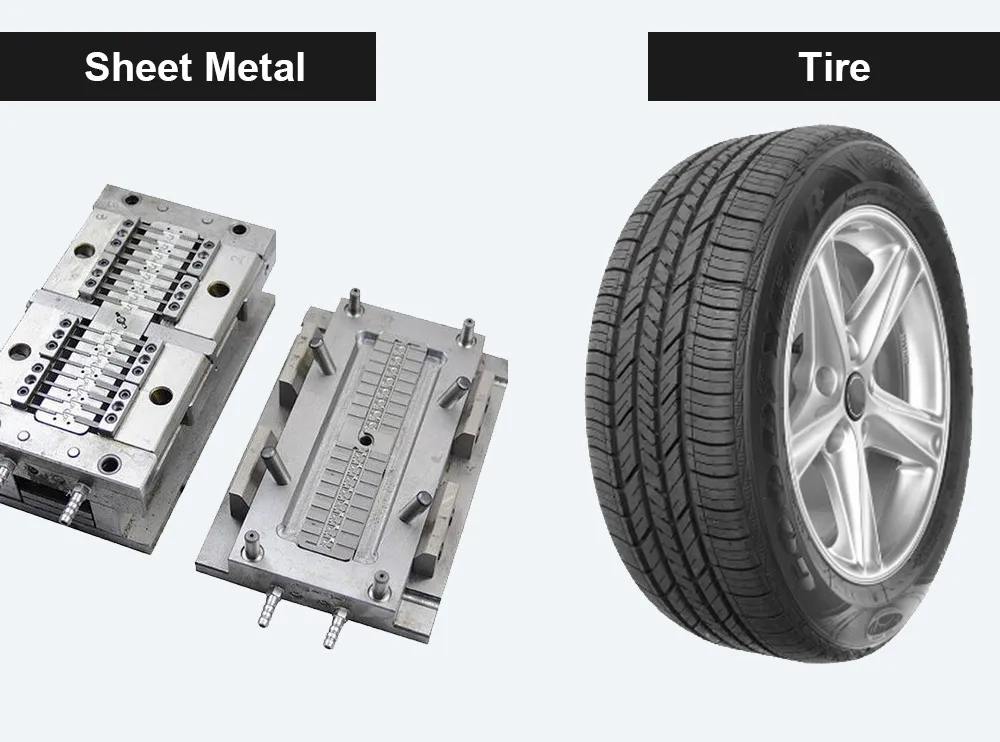
Automotive Industry
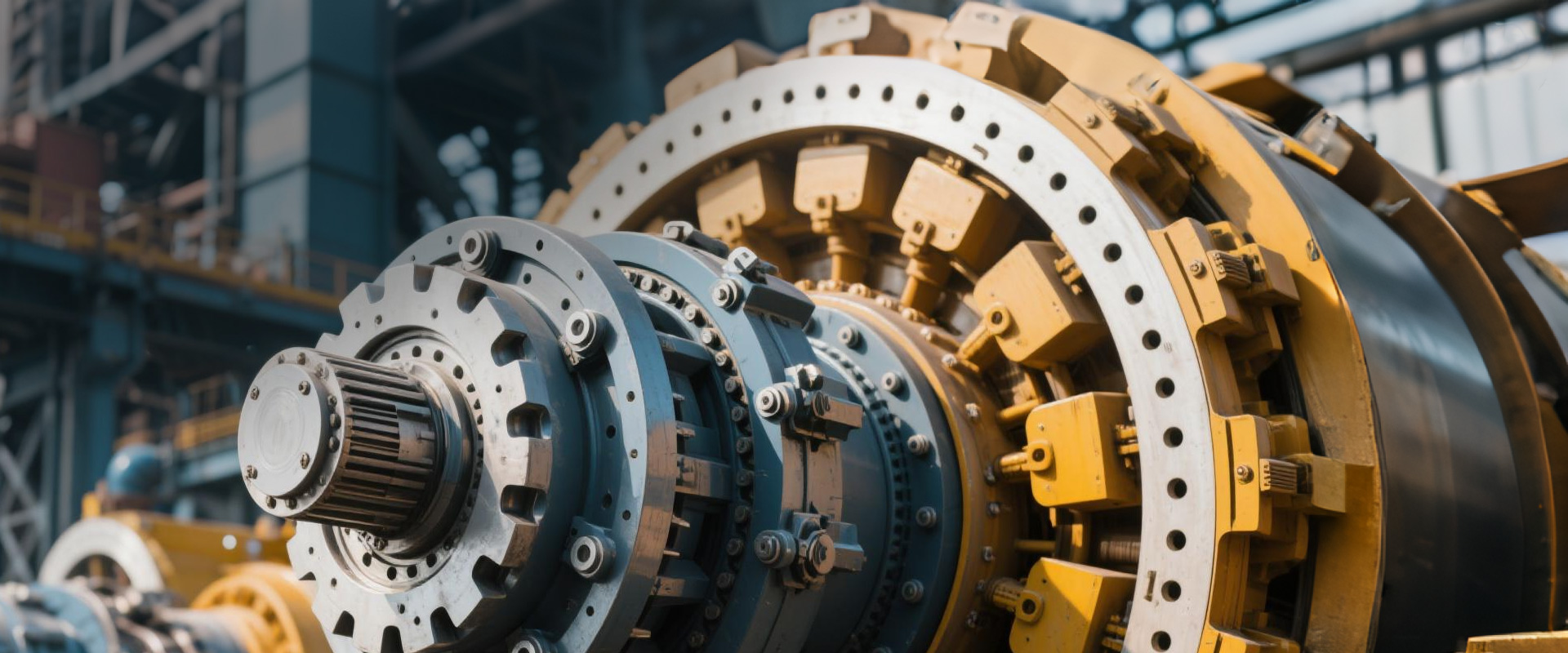
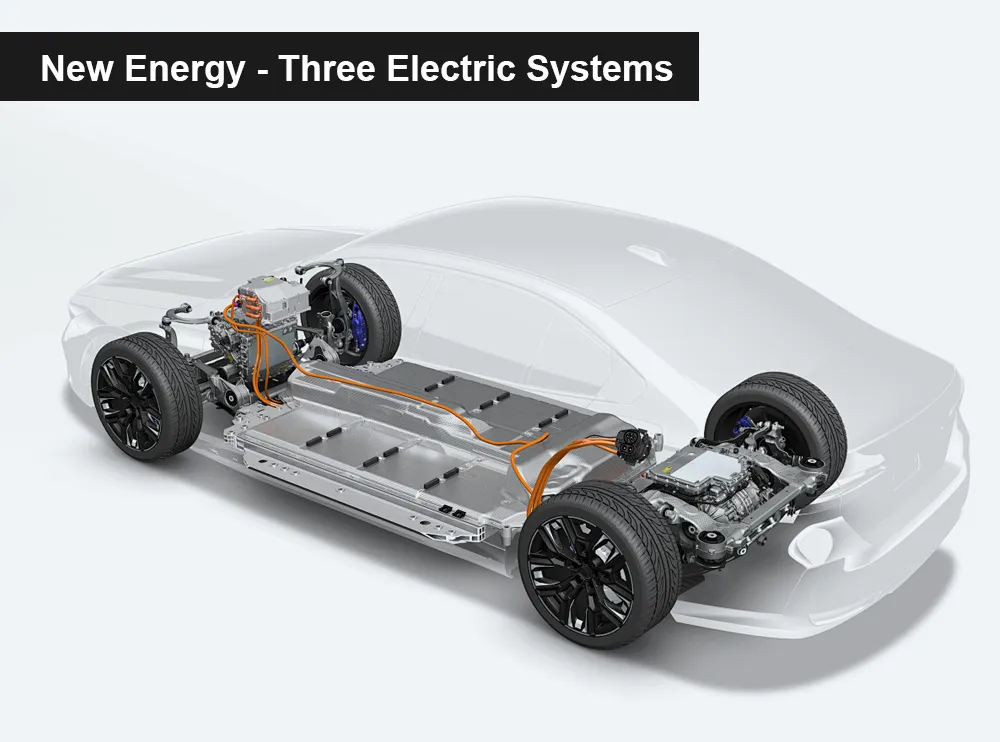
3D scanning technology is emerging as a cornerstone tool for digital transformation in the automotive industry, enhancing efficiency and reducing costs across the entire value chain - from R&D to after-sales services - while accelerating the development of new energy vehicles and personalized customization.

Automotive

Application Field:
Automotive Manufacturing


Surface Defect Detection
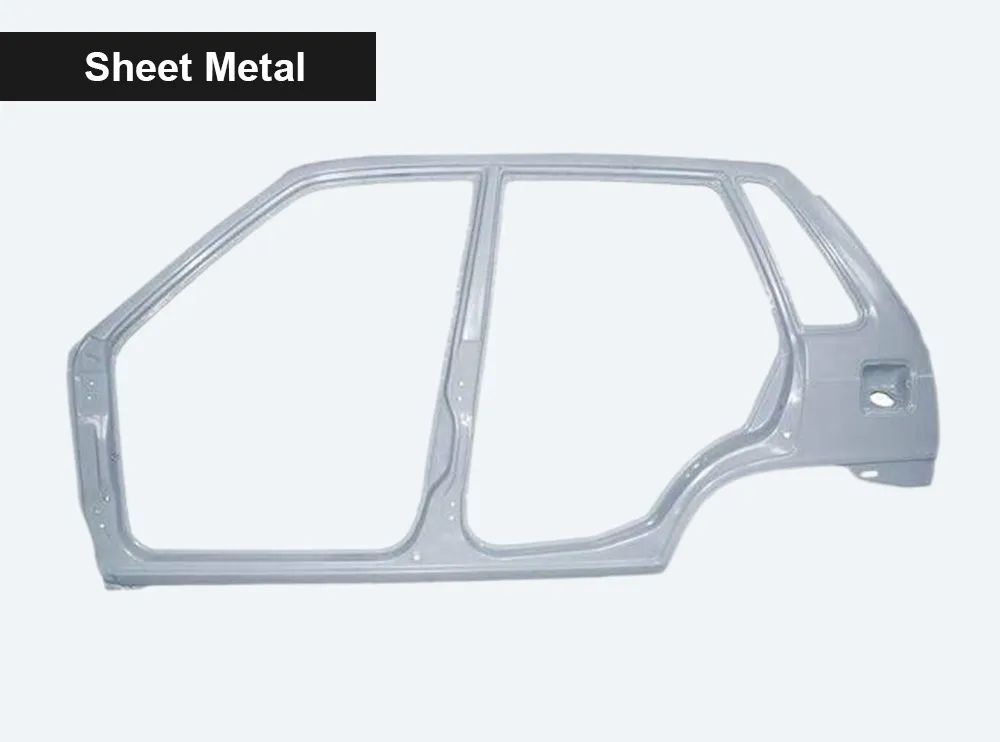
During the stamping process, sheet metal often exhibits issues such as surface unevenness, cracking, and excessive stretching.
Traditional CMM (Coordinate Measuring Machine) inspection requires a stable testing environment and lengthy measurement times, making it difficult to keep up with the fast-paced production demands of factories.
3D scanning technology can rapidly capture the 3D model of sheet metal, measuring key stamping features such as complete surfaces, holes, trimmed edges, springback, gaps, and flushness.


Automotive Customization
Personalized vehicle modification and customization often require 3D data of both interior and exterior components. However, such data is typically held by manufacturers and not publicly accessible.
With 3D scanning technology, professionals can accurately and efficiently capture complete 3D vehicle data, enabling streamlined design and modification processes.


Gap and flush analysis
3D scanning technology can accurately measure the gaps and flushes of vehicle exterior panels, guiding both pre-assembly processes and post-repair operations. It objectively reflects the gap and flush conditions at all measurement points, providing a complete inspection report for each vehicle. This ensures data visibility, quantifiability, and traceability.

Application Field:
Mold Manufacturing

Allowance Inspection
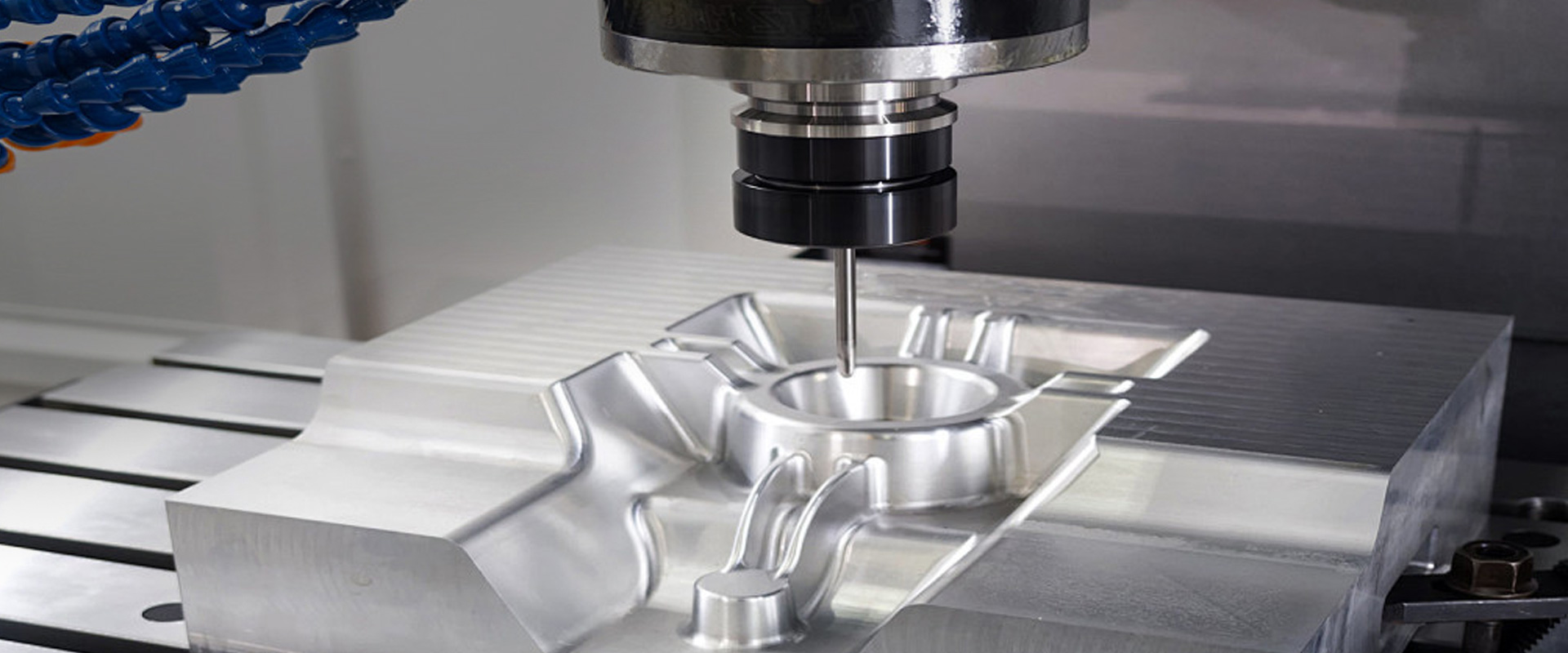
During inspection, engineers typically add extra material—known as machining allowance—to molds and dies. 3D scanning technology assists engineers in verifying whether sufficient machining allowance exists and monitors the manufacturing process.

Machining Optimization
Ensuring the product has an appropriate machining allowance is crucial. For complex-shaped molds, rapid positioning of machining references is often required. 3D scanners help machine tools establish the machining coordinate system, significantly reducing the difficulty and errors associated with manual marking.

Post-Machining Inspection of Molds
Due to variations in operator handling and machining equipment, discrepancies may exist between the actual manufactured mold and the theoretical design. Therefore, it is essential to inspect critical features of the finished mold to ensure accuracy.

Mold Repair & Maintenance
Over prolonged usage, molds inevitably experience wear and deformation. 3D scanning technology enables rapid and quantitative assessment of deviations from the ideal mold geometry, providing precise guidance for technicians to perform targeted repairs and restore optimal performance.

Application Field:
Aerospace


Blade Profile Calibration
3D scanning technology captures the surface contours of curved blades and compares them with theoretical CAD models, generating tolerance deviation color maps to identify precise calibration direction and allowance margins. A single scanner can analyze blades of varying geometries, significantly reducing the complexity of traditional measurement methods.


Reverse Engineering
By acquiring high-density point clouds or mesh data of aerospace components via 3D scanning, engineers can use specialized reverse engineering software to reconstruct parametric CAD models from physical parts. Designers can further modify these models, streamlining the redesign process and accelerating iterations for legacy parts or performance upgrades.

Application Field:
Energy & Heavy Industry


Raw Inspection
High-precision scanning of rough castings/forgings, comparing with CAD models to detect machining allowances and geometric tolerances.


Machining Allowance Inspection
Acquire the actual geometric data of rough blanks through 3D scanning, automatically compare with design models, and quantify machining allowances for each region.
Surface Defect Detection
During usage, the surfaces of large equipment may experience deformation, cracks, and irregular changes. Traditional measurement methods are unable to quantitatively analyze these variations. Three-dimensional scanning technology can monitor the changes in surface defects over time, playing a significant role in managing the product lifecycle.

Contact US
Product Information
Quantity
Unit
Piece
Support order samples, customization, wholesale direct, and complete payment. If the product you look for does not have corresponding customized content, pls fill out the form below to contact us, and we will reply ASAP.